
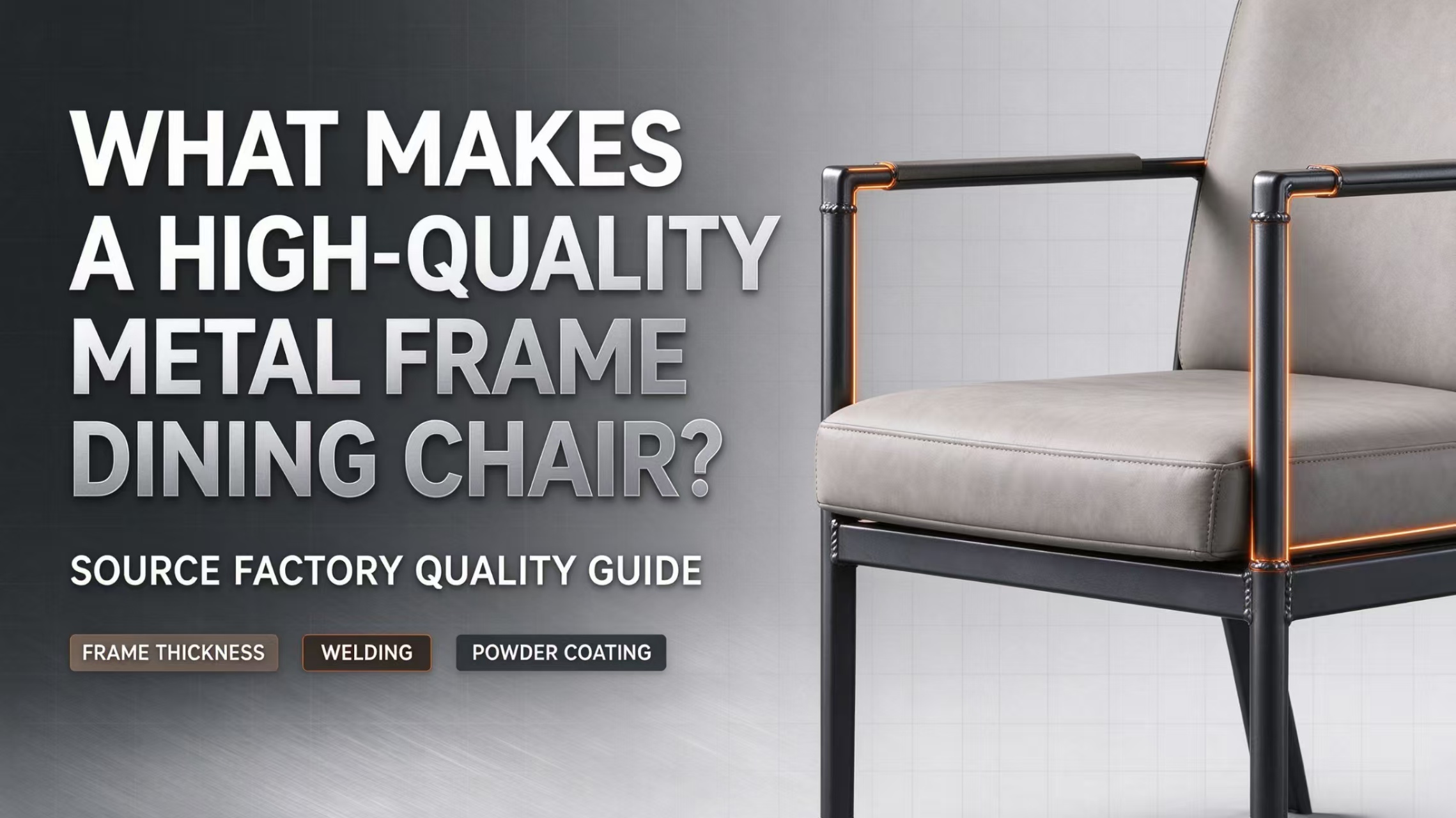
What Makes a High-Quality Metal Frame Dining Chair?
Metal dining chairs remain a staple for furniture wholesalers, home retailers and hospitality projects. While many suppliers offer low-priced metal frame chairs, only well-engineered frames deliver long-term performance, fewer returns and satisfied end customers. For importers and bulk buyers, understanding metal chair frame quality is the first step to sourcing durable metal dining chairs that stand out in competitive markets.
Introduction to Metal Dining Chair Construction
A metal dining chair frame is more than a decorative support. It carries constant dynamic load, resists shifting and impact, and must hold its shape for years. Cheap chairs often cut corners on raw materials and workmanship, leading to wobbling, cracked joints, rust and bending. Premium frames follow a complete production flow: tube cutting, bending, welding, grinding, surface treatment and stability testing. Every stage directly decides whether your wholesale stock will earn repeat orders or complaints.
Types of Metal Used in Dining Chair Frames
Mild carbon steel is the most common option for upholstered dining chairs, balancing strength and cost. Aluminum is lighter, naturally rust-resistant and popular for indoor-outdoor mixes, though it costs more and has lower rigidity than steel. Stainless steel suits high-end commercial spaces with frequent wet cleaning. Avoid vague “iron frame” offers; confirm material grade in your purchase specification.
Frame Thickness and Structural Strength
Tube wall thickness is one of the clearest benchmarks of metal chair frame quality. Light residential chairs may use 1.2 mm tubing, but for wholesale and commercial use, 1.5 mm or thicker steel is recommended. Thin tubing bends easily under regular use. Good factories reinforce stress points with cross braces to improve overall rigidity, instead of relying only on four legs.
Welding Quality and Joint Stability
Poor welding is the top failure point for cheap metal chairs. High-quality frames use full, uniform welds with no pinholes, cold joints or sharp burrs. After welding, seams are smoothly ground. Weak spot welds will loosen after repeated sitting and movement, causing the chair to wobble. Reliable manufacturers inspect every joint before finishing.
Powder Coating and Surface Protection
Powder coating is the standard premium finish, far superior to spray paint. It adheres tightly, resists scratches, chipping, UV fading and rust. Low-quality paint peels quickly once scratched, exposing bare metal to corrosion. Check for even coverage, no orange peel texture and consistent color batch to batch — critical for mixed-container wholesale orders.
Weight Capacity and Stability Testing
Durable metal dining chairs pass repeated static load and tilt stability tests. Trusted suppliers provide clear weight ratings and test reports. Commercial-grade chairs usually support 120 kg or more. Quality checks also include floor protection glides to prevent sliding and floor scratches, a small detail that reduces buyer feedback.
How to Evaluate a Manufacturer's Quality Control
A good source factory does QC at multiple stages: incoming tube inspection, mid-line welding check, finished sample load testing and random carton inspection before shipment. Ask for samples, test certificates and batch inspection records. Avoid suppliers who cannot provide consistent technical data, even with attractive low prices. Stable QC protects your brand reputation.
Conclusion
High-quality metal frame dining chairs combine proper metal grade, sufficient tube thickness, solid welding, reliable powder coating and formal load testing. For wholesale buyers, metal chair frame quality should always be prioritized over the lowest unit price. Partnering with a factory with strict quality control lets you supply durable metal dining chairs to retailers, restaurants and project clients confidently.