
In the international furniture wholesale market, which metal-upholstered dining chairs have a greater price advantage there? Why?
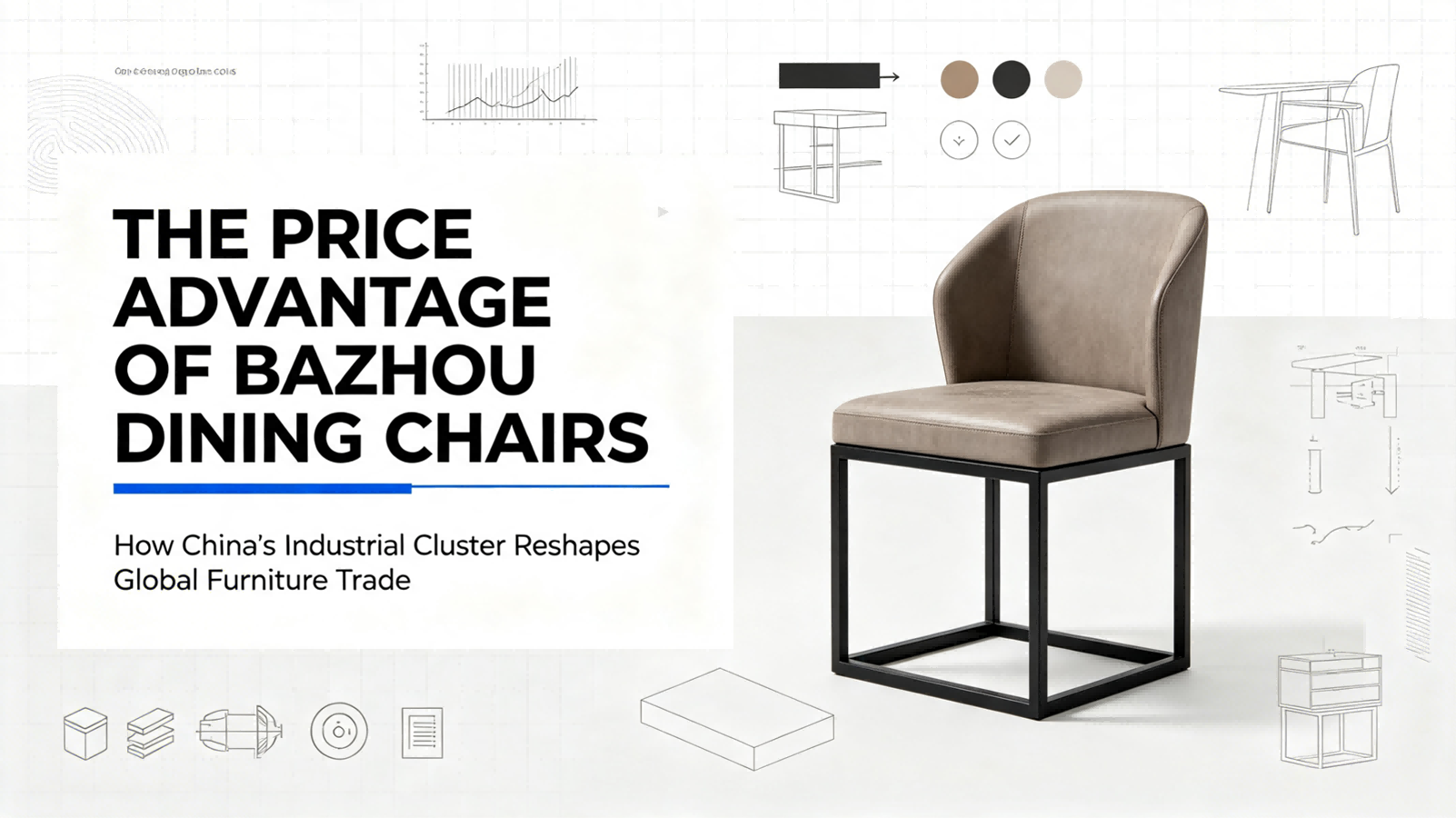
In the global dining‑chair foreign trade track, Bazhou in Hebei Province of China is a well‑recognized core industrial cluster for metal upholstered dining chairs. Home to more than 4,000 furniture and supporting enterprises, the region produces over 100 million sets of furniture annually, with products exported to more than 130 countries and regions and an annual output value exceeding 50 billion RMB. Compared with manufacturing hubs in Guangdong, Zhejiang, Southeast Asia and Europe & America, ex‑factory quotations for metal upholstered dining chairs of equal quality from Bazhou are generally 20%‑40% lower, while stable quality and delivery efficiency are maintained. This outstanding price competitiveness does not come from cutting corners or squeezing profit margins; instead, it is formed by structural advantages built upon a complete industrial cluster, extreme supply‑chain cost control, low operational expenses, standardized mass‑production modes and a mature foreign‑trade ecosystem. These core strengths are the key reasons why Bazhou dining chairs dominate the global mid‑low and mid‑end export market.
First‑rate industrial clusters eliminate extra supporting costs and maximize collaboration efficiency. As China’s largest and most complete specialized industrial base for metal & glass furniture, Bazhou has decades‑long experience in dining‑chair manufacturing and has built a closed‑loop “one‑kilometer full industrial chain”. In core production zones such as Shengfang and Wangzhuangzi, all raw and auxiliary materials for dining‑chair manufacturing are locally available: metal steel tubes, iron‑work profiles, spraying materials, sponge, PU leather, technical fabric, screws and cartons can all be sourced within a few kilometres. Every procedure including tube cutting, bending, welding, electrostatic spraying, sponge cutting, upholstery and final assembly is handled by specialized supporting manufacturers. Such high industrial agglomeration removes extra costs from cross‑regional procurement, transit logistics and communication. Specialised division of labour raises proficiency, product yield and production speed, lowering overall manufacturing costs from the industrial foundation.
Direct access to raw‑material sources eliminates mark‑ups and gives an edge on material costs. Major costs of metal upholstered dining chairs lie in metal frames and upholstery materials. Surrounded by large‑scale local steel mills, Bazhou gets thin‑walled steel tubes and iron‑work profiles for chairs directly from original producers without middle‑man premiums. Compared with coastal furniture hubs, material costs for metal components can drop by over 15%, with shorter lead‑times and no stock‑out surcharges. Meanwhile, bulk procurement of high‑density sponge, wear‑resistant leather and textiles keeps upholstery costs low. Local suppliers achieve high waste‑material recycling rates which further drive down unit prices. Unlike Southeast Asian factories that rely heavily on imported raw materials with extra tariff and logistics expenses, or Guangdong manufacturers facing high land‑driven material premiums, Bazhou secures low costs for both primary and auxiliary materials.
Low comprehensive operational costs cover land, labour and energy. Factory land rent in Bazhou’s township industrial parks is roughly one‑third of that in Guangdong and Zhejiang, greatly reducing fixed overheads that would otherwise be passed on to product prices. Decades of industry development have cultivated a large pool of skilled welders, spray‑painters and upholsterers specialising in metal dining‑chairs, with low rework rates and stable staffing at more competitive wage levels than coastal cities. Favourable local industrial‑energy policies keep utility costs under control. Most local original manufacturers adopt lean organisational structures without redundant administrative expenses, further cutting total operating expenditure.
Standardised mass‑production together with partial intelligent upgrading optimises cost via high volume. Bazhou factories focus on standard, universal foreign‑trade styles rather than high‑cost niche custom orders to suit overseas B2B wholesale demands. Leading manufacturers deploy automated tube cutting, integrated welding, intelligent spraying and assembly lines to replace manual labour, lifting output while reducing defect rates. Mould and equipment depreciation is spread across tens or hundreds of thousands of units. As genuine source manufacturers without distributors or intermediate foreign‑trade merchants, they offer direct ex‑factory prices for overseas wholesalers, exhibition buyers and cross‑border sellers. The high‑volume low‑margin business model creates positive feedback: higher production volumes bring lower unit costs and more competitive pricing. In addition, flat‑packing for sea freight maximises container loading capacity and cuts per‑chair maritime logistics costs.
A well‑established foreign‑trade ecosystem lowers overall transaction costs. Most local enterprises hold complete export qualifications and comply with quality standards for the EU, the Middle East, Southeast Asia and other major markets, avoiding heavy extra testing and modification fees. Benefiting from the Beijing‑Tianjin‑Hebei logistics hub, stable shipping and customs‑clearing services enable fast responses to large overseas orders. Factories keep R&D trial‑and‑error costs minimal by focusing on proven globally‑popular models, while shared industry know‑how accelerates style iteration without heavy R&D investment.
To conclude, Bazhou’s international price advantage for metal upholstered dining chairs stems not from low‑quality price wars but overlapping structural strengths: complete local supply chains removing intermediate premiums, low‑cost production fundamentals, cost‑optimised large‑scale manufacturing and mature export‑oriented services. These factors make Bazhou a core global export base for metal upholstered dining chairs.